

The government is reshaping the business rates system to make it fairer, more sustainable, and better suited to today’s economy.
Alongside reforms to multipliers, a routine revaluation of non-domestic properties will take effect on 1 April 2026.
For businesses, this means understanding the timeline — and taking steps now to prepare for potential changes in liabilities.
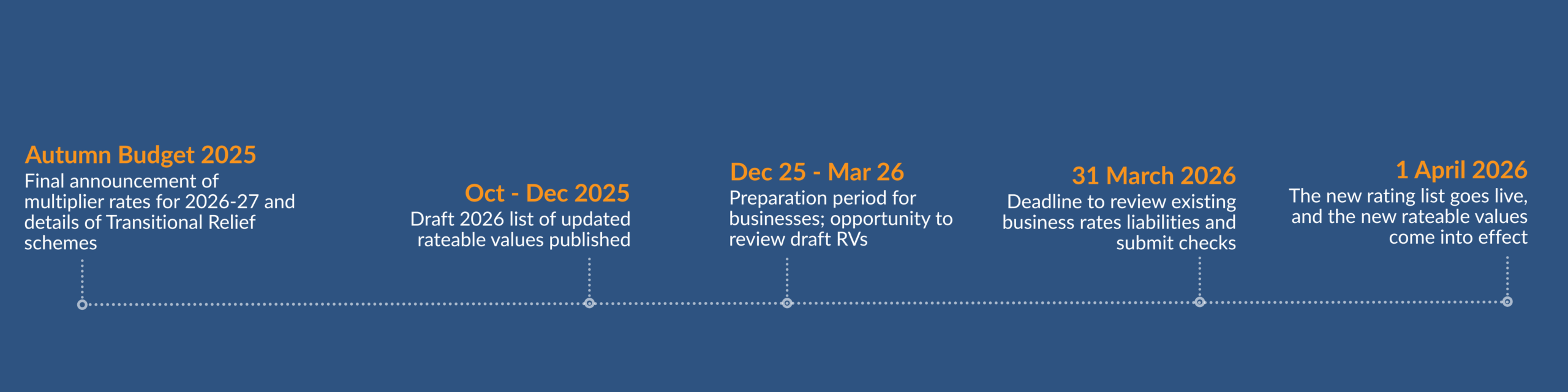
Key Dates in the Timeline
What Businesses Should Do to Prepare?
Check your current rateable value (RV):
Check your current RV and challenge if appropriate by 31st March 2026. Any reduction in the current assessment could have a ‘knock on’ effect to your liability in 2026.
Understand the Market and basis of value.
The 2026 Revaluation will be based upon rental values in 2024. Understand how market conditions have changed between 2021 and 2024 and how this could affect your property’s valuation in 2026.
Review eligibility for RHL Relief:
Retail, Hospitality, and Leisure businesses with RVs under £500,000 will benefit from new lower multipliers — but it’s important to confirm eligibility once secondary legislation is published.
Model different scenarios:
Use the draft list (due late 2025) to forecast your 2026 liability and test how changes could affect cash flow.
Plan for Transitional Relief:
If your business faces a sharp increase in rates, Transitional Relief may help ease the impact in the short term. But this support is only temporary — so it’s essential to plan and budget for your full liability once the relief period ends.
Engage early:
If you think your draft RV is inaccurate, be ready to review and challenge once the draft 2026 list is released.
The 2026 revaluation is more than a routine update — it’s part of a wider shift in how business rates are structured. Businesses that prepare early will be best placed to manage potential cost changes and protect their bottom line.
If you’d like to understand what the 2026 revaluation could mean for your business, get in touch with our team today at info@hanwaycommercial.com